Why Smaller Senior Care Homes Make Assisted Living Seem Like Home
Business Name: BeeHive Homes of White Rock
Address: 110 Longview Dr, Los Alamos, NM 87544
Phone: (505) 591-7021
BeeHive Homes of White Rock
Beehive Homes of White Rock assisted living care is ideal for those who value their independence but require help with some of the activities of daily living. Residents enjoy 24-hour support, private bedrooms with baths, medication monitoring, home-cooked meals, housekeeping and laundry services, social activities and outings, and daily physical and mental exercise opportunities. Beehive Homes memory care services accommodates the growing number of seniors affected by memory loss and dementia. Beehive Homes offers respite (short-term) care for your loved one should the need arise. Whether help is needed after a surgery or illness, for vacation coverage, or just a break from the routine, respite care provides you peace of mind for any length of stay.
110 Longview Dr, Los Alamos, NM 87544
Business Hours
Families generally start taking a look at assisted living or wider senior care choices because something has actually altered. A fall. Missed medications. Increasing confusion. Or a partner quietly confessing, "I can't do this alone anymore."

That is when the brochures start accumulating, and a number of them look the exact same: big structures, hotel-style lobbies, restaurant-style dining. On paper, it can be hard to understand why some households instead pick a small senior care home that looks nearly like a routine home on a peaceful street.
The distinction often becomes clear the minute you walk through the door.
The feel of a front door, not a lobby
When I tour households through small assisted living homes, the first thing they comment on is not the care plan or the activity calendar. They discover the smell of soup simmering on the range. The family photos on the mantle. The tv silently playing in the background rather of shrieking in a typical room. It feels like somebody's home due to the fact that it is.
In a small residential senior care home, you generally see 6 to 16 homeowners, not 80 or 120. Caretakers operate in the kitchen, assist with laundry, and sit at the very same dining table. The rhythm of the day feels closer to family life than to a program.
That environment matters more than many households understand. Older adults who have currently quit driving, possibly lost good friends or a spouse, and are handling health changes are being asked to adjust yet once again. A homelike environment softens that shift. Residents can unwind into a place that acts like a home instead of a facility.
I have actually seen people who hardly left their spaces in big assisted living neighborhoods come to life in a smaller setting: sitting at the kitchen area island peeling apples, chatting with caregivers, or signing up with a neighbor on the patio. Exact same individual, very same diagnosis, various environment.
Why size straight impacts quality of care
The size of a senior care setting is not simply cosmetic. It alters what is possible.
In a small assisted living home, care personnel normally understand every resident's routines by heart: how they like their coffee, which shirt they choose on Sundays, whether they tend to roam at 3 a.m. That depth of familiarity is difficult to develop when personnel are accountable for a long corridor of apartments.
To understand the trade-offs, it assists to look at a few key distinctions in between larger communities and smaller homes.
-
Staffing patterns and continuity
In huge structures, staffing often works by zones or hallways. A caregiver may be responsible for 12 to 20 homeowners on a shift, often more. Turnover can be high, which suggests citizens continuously meet new faces. In a small home with 6 to 10 residents, a caretaker's assignment may cover the entire house. Ratios vary, but it is common to see one caregiver for 3 to 5 citizens during the day in better small homes, and lower at night. This indicates more time per individual and quicker reaction to needs. -
Supervision and safety
Households often worry about security, particularly with memory issues. In a large assisted living setting, a resident can stroll a far away from their room to typical locations, and staff might not notice instantly if something is wrong. In a smaller home, common areas and bed rooms are better together. Caregivers can see and hear more just by existing in the home. This does not replace appropriate fall-prevention or secure exits when dementia is involved, however it offers a built-in layer of natural oversight. -
Flexibility of routines
Big communities frequently rely on schedules for efficiency: set meal times, shower days, group activities at set hours. Some citizens take pleasure in the structure, but others find it stiff. In a small senior care home, it is easier to flex around the individual. If someone chooses a late breakfast or a quiet bath in the afternoon, there is less administration to navigate. Staff can state, "Sure, let's do that," rather of, "We will see if we can fit you onto the schedule." -
Staff relationships and accountability
In small settings, everybody sees whatever. If a resident has a poor appetite for 2 days, the caregiver, the nurse, and typically the owner or administrator will notice and speak about it. There is less room for someone to "slip through the fractures." I have seen small homes identify urinary tract infections, medication side effects, and state of mind modifications earlier merely due to the fact that personnel frequently see the very same few individuals in close quarters.
None of this suggests a huge assisted living community instantly provides bad senior care. Some are exceptional, with strong staffing and thoughtful programs. Size simply sets the stage. It forms how care is provided and how quickly staff can keep real, personalized attention.
Emotional safety: being known, not just cared for
The clinical side of elderly care is only half the picture. Emotional security matters just as much, especially for individuals dealing with loss of independence.
In a small home, locals typically discover each other's names within days. They see the same staff members day after day. They see when somebody is missing from breakfast and ask about them. There is a sort of common intimacy: the caretaker who understands precisely when to bring the cardigan, or the fellow resident who remembers somebody's preferred dessert.
I keep in mind one female, Margaret, who moved into a small home after 2 hard months in a much bigger assisted living facility. In the larger setting, she invested most of her time in her room. She informed her daughter, "I feel like I am in a hotel where I do not know anyone." In the small home, the manager welcomed her at the door, helped her hang household photos, and sat with her at the table that initially evening. Within a week, she and another resident were enjoying old musicals together every afternoon.
Nothing about her care plan changed in a technical sense. Exact same medications, same medical diagnosis, exact same walker. The difference was basic: she felt known.
When older adults feel known, three things tend to follow. First, they participate more. They are more likely to come to the table, sign up with discussions, or go for a walk in the backyard. Second, they communicate symptoms earlier since they feel somebody is truly listening. Third, behavior issues connected to anxiety or confusion often relieve, especially in dementia, because the environment feels predictable and supportive.
Large structures can definitely create pockets of this type of belonging. Some do it well. Small homes, by their very nature, begin closer to that goal.
How smaller homes manage changing care needs
Families typically stress that a small senior care home will not be able to manage increasing needs, particularly for dementia, mobility problems, or complex medical conditions. This is a fair issue, and it does not have a single answer, since guidelines and designs differ by region.
Many residential assisted living homes are licensed to supply assist with all the typical activities of daily living: bathing, dressing, toileting, moving, and medication administration or management. Some also specialize in memory care, with qualified personnel and protected environments for those with Alzheimer's or other dementias. A subset works carefully with going to hospice companies to support locals at the end of life, which allows lots of people to avoid another disruptive move.
Where small homes can have a hard time is with highly technical medical requirements: ventilators, frequent IV medications, or complex wound care that needs a nurse on-site for long blocks of time. In those cases, a knowledgeable nursing center or specific medical setting might be safer and more appropriate.
The practical question for families is not "Can a small home deal with whatever?" however "Can this specific home handle what my loved one needs now, and fairly handle what we anticipate over the next year or 2?" Well-run homes will be candid about their limitations. If a provider promises they can handle any level of care no matter what, without ever needing to move someone, that is a warning indication more than a reassurance.
It is also important to ask how the home collaborates with outside healthcare providers. Great homes preserve close interaction with medical care doctors, home health, therapy service providers, and hospice groups. They are utilized to scheduling mobile laboratory draws, arranging transport to appointments, and monitoring for modifications that might signify infection, medication problems, or pain.
The special role of respite care in small homes
Respite care can be a lifeline for family caretakers who are reaching their limit. It describes short-term stays, generally from a couple of days up to a few weeks, where the older adult moves into an assisted living or senior care setting briefly. This gives the main caretaker a chance to rest, travel, or attend to other responsibilities.
Small residential care homes are often ideal places for respite care, specifically for someone who has never ever resided in any type of senior community before. Moving briefly into a very large assisted living building with long hallways and lots of unfamiliar faces can be overwhelming. A smaller home feels closer to what the individual currently knows.
There is likewise a useful advantage. Staff in a small home can normally adjust a respite guest more quickly, since there are less residents to discover and less regimens to juggle. I have seen families use a a couple of week respite stay in a small home as a sort of "test drive." The older adult gets a feel for shared living, the household sees how personnel connect with them, and both sides can choose whether a longer-term arrangement feels right.
For caretakers at home, respite in a small setting also offers comfort. They understand their loved one is not lost in the shuffle which any concern is most likely to be noticed promptly.
Trade-offs: when larger assisted living communities make sense
Smaller is not automatically better for every single person or every situation. Large assisted living neighborhoods use some advantages that deserve naming clearly.
They often have more official programming: several everyday activities, on-site gyms, chapels, beauty parlors, and transportation for group trips. Extroverted homeowners, or those still quite independent, may thrive because environment. Somebody who enjoys large-group bingo, organized exercise classes, and a dining room bustling with discussion may find a large neighborhood more stimulating.
Big structures also sometimes have on-site medical centers, therapy health clubs, or pharmacy services. For specific complicated conditions, or when frequent rehabilitation is required, this can be convenient. Prices can in some cases be more predictable also, with standardized plans and corporate policies.
Financially, there is no universal rule. Some small homes are more affordable than large neighborhoods, especially in markets where realty expenses are lower and overhead is modest. Others are quite costly, particularly if they maintain very low staff-to-resident ratios. Households require to compare not simply the base rate but also the care charges, medication costs, and add-ons.
Lastly, some older grownups simply prefer the feeling of a bigger, busier location. They like having multiple dining rooms, official events, or the sense of living in a "neighborhood" rather than a single house. Personality and choice matter as much as diagnosis.
What "homelike" truly suggests in practice
The word "homelike" shows up in almost every senior care brochure. In a smaller residential home, it needs to be more than marketing language. It must show up in the small, everyday details.
Meals, for instance, are normally prepared in the cooking area where residents can see and smell what is taking place. Breakfast might not be a set plated meal but a discussion: "Do you feel like oatmeal or eggs today?" Residents might help set the table or fold napkins. Even if someone does not actively participate, merely viewing the natural circulation of a home can be grounding.
Bedrooms feel like real spaces, not hotel units. There is often more versatility about bringing furnishings from home, hanging art, or reorganizing things. When someone wakes confused at night, they are just a few actions from a caretaker's bedroom or staff office.
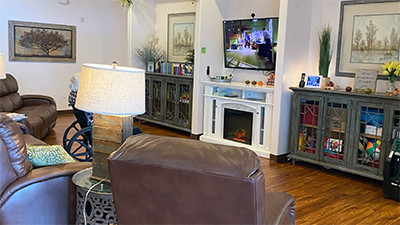
Noise levels are various too. Rather than overhead paging systems or large tvs in every common assisted living white rock nm location, you hear the noises of a normal house: water running, a radio in the kitchen area, two homeowners talking near the window. For individuals with dementia or sensory level of sensitivity, this calmer environment can reduce agitation and overwhelm.
Families likewise tend to incorporate differently. In a small home, there is generally no requirement to arrange visits around fancy sign-in systems or navigate a substantial parking area. Family members stroll in, greet personnel by given name, and typically end up sharing a cup of coffee at the table. Vacations can seem like extended family events, with adult children, grandchildren, and staff all weaving together.
Questions to ask when visiting a small senior care home
Choosing a senior care setting is not about finding perfection. It is about matching a real person, with specific requirements and preferences, to a genuine location with particular strengths and limitations. To make that match, families require useful, pointed questions.
Here is a basic list to bring when you tour a small assisted living or residential care home:
- What is the typical staff-to-resident ratio during days, nights, and nights, and how knowledgeable are the caregivers?
- Exactly which care tasks are included in the base rate, and what costs additional if my loved one's requirements increase?
- How do you deal with medical concerns after hours, and who chooses when to send out somebody to the hospital?
- How do you incorporate new citizens emotionally, specifically if they are shy, distressed, or living with dementia?
- What kinds of respite care stays do you offer, and just how much notification do you need to accept a short-term guest?
Listen not simply to the responses, but to how staff respond. Do they speak in specifics or in generalities? Are they comfortable acknowledging limitations? Do you see caretakers connecting with homeowners in genuine time, and if so, does it feel warm and real or hurried and task-focused?
Trust your observations as much as the shiny materials. Notice smells, sounds, body movement, and easy things like whether call lights, if present, are neglected or addressed quickly.
When staying home is no longer working
A peaceful fact in elderly care is that most people wish to remain at home, but not everyone can do so safely. Families typically wait until a crisis to think about assisted living, by which time choices narrow. Exploring alternatives early, specifically smaller homes, can minimize that pressure.
For some older grownups, the shift to a small senior care home can feel less like "entering into a center" and more like moving to a different family home where help is just integrated in. That state of mind shift matters. It honors the individual as more than a set of care tasks and acknowledges their requirement for belonging, familiarity, and dignity.
Respite care is a mild way to start that expedition. A week in a small home, framed as a brief stay while the household caregiver rests or travels, offers everybody real info about how the older adult reacts to shared living. Often, the individual surprises the family by saying they feel much safer or less lonesome. Sometimes, it confirms that home with extra assistance remains the much better alternative for now.
Either way, the choice is made with experience, not simply speculation.
The heart of the matter: home as a feeling, not an address
Assisted living, senior care, and respite care are technical terms, but under them sits a basic human question: "Where will I still feel like myself?" For many older adults, specifically those who find large, institutional environments frightening, the response lies in smaller residential homes.
These homes can not change the history and intimacy of someone's original home. They can, nevertheless, offer something just as essential in this phase of life: a place where regimens feel familiar, personnel seem like extended household, and the scale of daily life matches what an older body and mind can comfortably navigate.

When households step into a small assisted living home and say, typically with some surprise, "This actually seems like a home," they are pointing to the real value of these environments. Not chandeliers or grand lobbies, however a pot on the stove, a well-worn recliner, a caretaker leaning in to hear a story they have actually most likely heard 3 times before and still deal with as new.
That sensation is challenging to measure on a comparison chart. Yet for the older adult who has actually given up a lot currently, it can make all the difference between merely receiving care and really living somewhere that feels like home.
BeeHive Homes of White Rock provides assisted living care
BeeHive Homes of White Rock provides memory care services
BeeHive Homes of White Rock provides respite care services
BeeHive Homes of White Rock supports assistance with bathing and grooming
BeeHive Homes of White Rock offers private bedrooms with private bathrooms
BeeHive Homes of White Rock provides medication monitoring and documentation
BeeHive Homes of White Rock serves dietitian-approved meals
BeeHive Homes of White Rock provides housekeeping services
BeeHive Homes of White Rock provides laundry services
BeeHive Homes of White Rock offers community dining and social engagement activities
BeeHive Homes of White Rock features life enrichment activities
BeeHive Homes of White Rock supports personal care assistance during meals and daily routines
BeeHive Homes of White Rock promotes frequent physical and mental exercise opportunities
BeeHive Homes of White Rock provides a home-like residential environment
BeeHive Homes of White Rock creates customized care plans as residents’ needs change
BeeHive Homes of White Rock assesses individual resident care needs
BeeHive Homes of White Rock accepts private pay and long-term care insurance
BeeHive Homes of White Rock assists qualified veterans with Aid and Attendance benefits
BeeHive Homes of White Rock encourages meaningful resident-to-staff relationships
BeeHive Homes of White Rock delivers compassionate, attentive senior care focused on dignity and comfort
BeeHive Homes of White Rock has a phone number of (505) 591-7021
BeeHive Homes of White Rock has an address of 110 Longview Dr, Los Alamos, NM 87544
BeeHive Homes of White Rock has a website https://beehivehomes.com/locations/white-rock-2/
BeeHive Homes of White Rock has Google Maps listing https://maps.app.goo.gl/SrmLKizSj7FvYExHA
BeeHive Homes of White Rock has Facebook page https://www.facebook.com/BeeHiveWhiteRock
BeeHive Homes of White Rock has an YouTube page https://www.youtube.com/@WelcomeHomeBeeHiveHomes
BeeHive Homes of White Rock won Top Assisted Living Homes 2025
BeeHive Homes of White Rock earned Best Customer Service Award 2024
BeeHive Homes of White Rock placed 1st for Senior Living Communities 2025
People Also Ask about BeeHive Homes of White Rock
What is BeeHive Homes of White Rock Living monthly room rate?
The rate depends on the level of care that is needed (see Pricing Guide above). We do a pre-admission evaluation for each resident to determine the level of care needed. The monthly rate is based on this evaluation. There are no hidden costs or fees
Can residents stay in BeeHive Homes until the end of their life?
Usually yes. There are exceptions, such as when there are safety issues with the resident, or they need 24 hour skilled nursing services
Do we have a nurse on staff?
No, but each BeeHive Home has a consulting Nurse available 24 – 7. if nursing services are needed, a doctor can order home health to come into the home
What are BeeHive Homes’ visiting hours?
Visiting hours are adjusted to accommodate the families and the resident’s needs… just not too early or too late
Do we have couple’s rooms available?
Yes, each home has rooms designed to accommodate couples. Please ask about the availability of these rooms
Where is BeeHive Homes of White Rock located?
BeeHive Homes of White Rock is conveniently located at 110 Longview Dr, Los Alamos, NM 87544. You can easily find directions on Google Maps or call at (505) 591-7021 Monday through Sunday 9:00am to 5:00pm
How can I contact BeeHive Homes of White Rock?
You can contact BeeHive Homes of White Rock by phone at: (505) 591-7021, visit their website at https://beehivehomes.com/locations/white-rock-2/, or connect on social media via Facebook or YouTube
Viola's offers familiar Italian comfort food that residents in assisted living or memory care can enjoy during senior care and respite care visits.
Ends · EDGARFCXW856